Financial sextortion is a horrific crime. We’ve spent years working closely with experts, including those experienced in fighting these crimes, to understand the tactics scammers use to find and extort victims online, so we can develop effective ways to help stop them.
Today, we’re sharing an overview of our latest work to tackle these crimes. This includes new tools we’re testing to help protect people from sextortion and other forms of intimate image abuse, and to make it as hard as possible for scammers to find potential targets – on Meta’s apps and across the internet. We’re also testing new measures to support young people in recognizing and protecting themselves from sextortion scams.
These updates build on our longstanding work to help protect young people from unwanted or potentially harmful contact. We default teens into stricter message settings so they can’t be messaged by anyone they’re not already connected to, show Safety Notices to teens who are already in contact with potential scam accounts, and offer a dedicated option for people to report DMs that are threatening to share private images. We also supported the National Center for Missing and Exploited Children (NCMEC) in developing Take It Down, a platform that lets young people take back control of their intimate images and helps prevent them being shared online – taking power away from scammers.
Introducing Nudity Protection in DMs
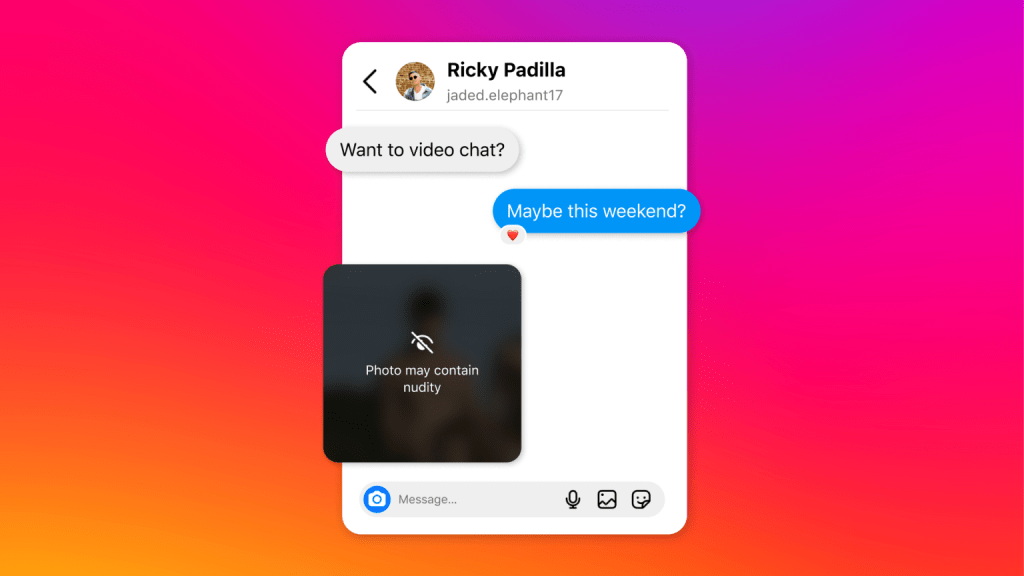
While people overwhelmingly use DMs to share what they love with their friends, family or favorite creators, sextortion scammers may also use private messages to share or ask for intimate images. To help address this, we’ll soon start testing our new nudity protection feature in Instagram DMs, which blurs images detected as containing nudity and encourages people to think twice before sending nude images. This feature is designed not only to protect people from seeing unwanted nudity in their DMs, but also to protect them from scammers who may send nude images to trick people into sending their own images in return.
Nudity protection will be turned on by default for teens under 18 globally, and we’ll show a notification to adults encouraging them to turn it on.
When nudity protection is turned on, people sending images containing nudity will see a message reminding them to be cautious when sending sensitive photos, and that they can unsend these photos if they’ve changed their mind.
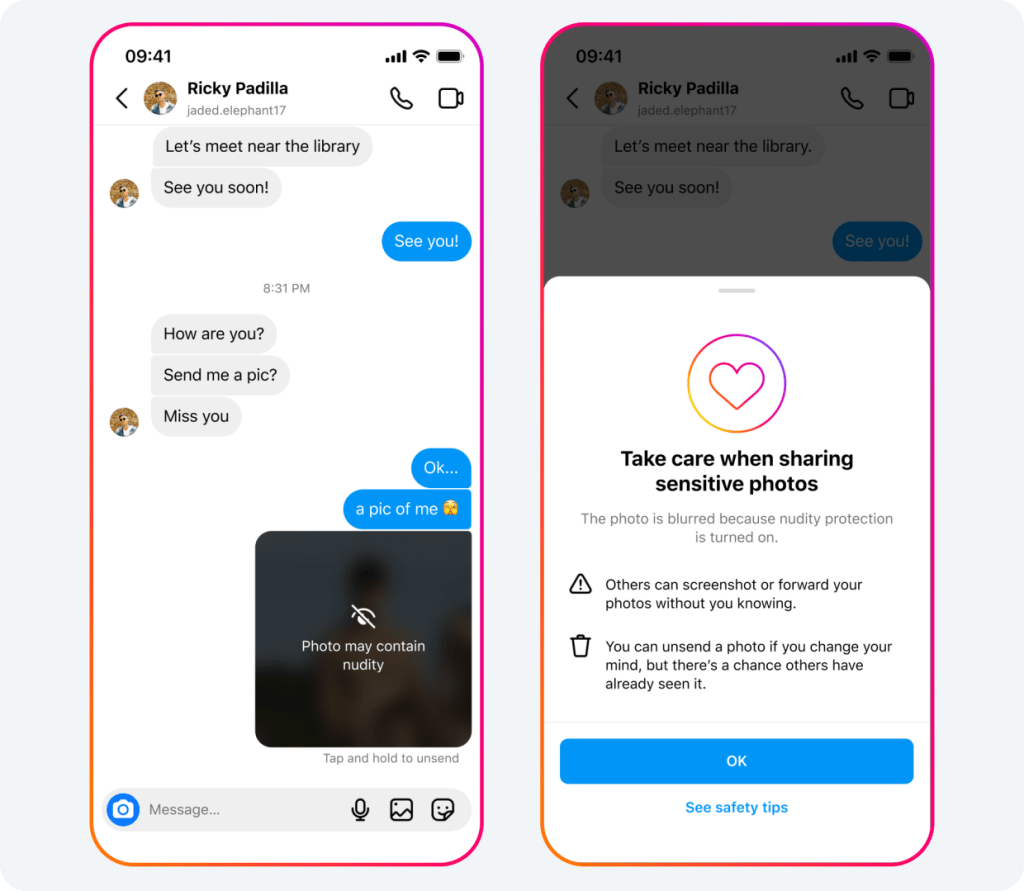
(Source: Meta)

Leave a comment